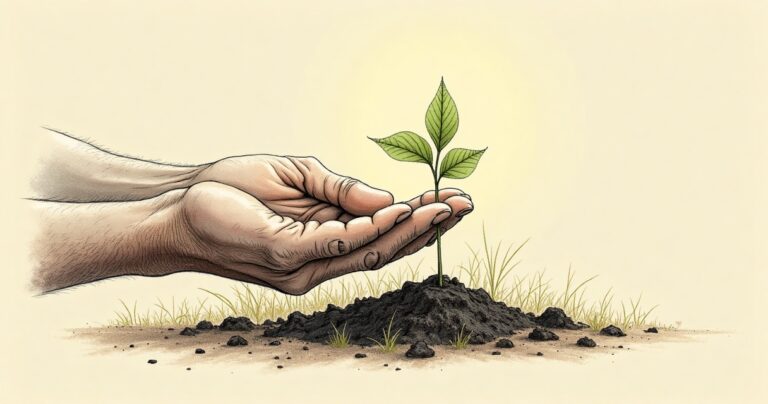


We treat our bodies like the background hum of a refrigerator. As long as it’s running, we don’t notice it. The moment it stops, the silence is deafening. We are conditioned to chase external markers of success—promotions, relationships, possessions—while ignoring the silent, sustaining pulse that makes all of it possible. The phrase “don’t take good health for granted” is a cliché precisely because it’s a truth we perpetually forget. It’s not a command to live in fear of sickness, but an invitation to shift our perception right now, while the hum of life is still steady.
Table of Contents
The Quiet Gift We Forget to Notice
Health is a currency we spend without checking the balance. You wake up, your lungs draw air, your heart pumps blood, and your neurons fire in perfect synchronicity. It’s a biological miracle that doesn’t charge a subscription fee. Yet, because it’s our default state, we rarely pause to marvel at it. We save our gratitude for the grand gestures and the lucky breaks, overlooking the baseline wellness that allows us to chase those things in the first place. To not take good health for granted is to recognize that this quiet, steady state is actually the most valuable asset you own. It is the canvas upon which every other experience is painted.
Why We Drift into Taking Health for Granted
There is a psychological term for this: hedonic adaptation. Humans are hardwired to return to a baseline level of happiness regardless of positive or negative changes. This mechanism is a survival tool, but it also makes us numb to the good things that stick around. When your knee doesn’t hurt, you don’t think about your knee. When your vision is clear, you don’t celebrate the vibrant colors of a sunset. We drift into a state of expectation, where wellness is seen as a permanent right rather than a temporary, fragile condition. Furthermore, modern culture often glorifies burnout. We celebrate the person who ignores their body’s needs to hit a deadline, treating the body as an obstacle to productivity rather than the engine of it. This cultural drift is why we must consciously push back and intentionally remember that we are, at our core, fragile biological systems.
The Wake-Up Call No One Asks For
Often, the only thing that shatters the illusion of permanent health is a loss. A sudden diagnosis, a tweaked back that leaves you bedridden, or a simple head cold that makes you realize how fantastic it felt to breathe through both nostrils. These are the uninvited wake-up calls. They come like a bucket of ice water, instantly recalibrating our priorities. The problem is, once the fever breaks or the back heals, the refrigerator hum returns, and we slip back into the amnesia of the well. This is the cycle of human nature. But wisdom lies in learning from the imagined loss, not just the actual one. You don’t have to wait for a crisis to break the spell. You can practice what the Stoics called premeditatio malorum—visualizing the loss of what you have—not to breed anxiety, but to ignite a profound, immediate gratitude for its current presence.
Small Ways to Appreciate Your Body Today
Appreciation doesn’t have to be a grand, sweeping gesture. It’s not about running a marathon to prove you’re healthy. It’s about micro-moments of acknowledgment. When you walk up a flight of stairs without getting winded, notice it. When you eat a meal that nourishes you, recognize that your body is converting that food into energy and repair with astonishing precision. You can practice this by challenging the overreach of the mind. Just as you might learn to not act when angry, you can learn to pause and not ignore the body’s quiet signals. A simple body scan, where you mentally check in with your toes, ankles, knees, and hips, can be a powerful act of rebellion against the habit of taking health for granted. You are looking for problems, yes, but mainly you are looking for the silent, pain-free zones and saying, “Thank you. I see you working.”
Balancing Gratitude and Action
There is a fine line between appreciating health and becoming a hypochondriac, or between being grateful and being passive. Appreciating your health doesn’t mean you just sit there and smile at your pulse. It means you respect the machine enough to use it, and to fuel it properly. If you don’t take good health for granted, you don’t just hoard it; you invest it. You move your body because you can. You feed it well because it deserves premium fuel. This is where gratitude morphs into stewardship. It is a dynamic relationship. You are thankful for the car, so you take it for a drive and you change the oil. You are not sitting in the garage, afraid to put miles on the odometer. This approach mirrors the resilience found in keeping your face to the sunshine—you acknowledge the light that exists, and you use it as a directional force to grow, not just to bask in the comfort of a pain-free day.
A Daily Practice of Noticing What Works
Meditation is often perceived as a practice of silence, but it can also be a practice of noticing. For a few minutes each day, simply sit and notice the functions you rarely command. The automatic breath. The steady beat. The ambient temperature of your skin. This is a radical departure from the constant scanning for problems that our brains default to. We usually scan our environment for threats, and our bodies for symptoms of sickness. A daily gratitude practice for health flips the script. You scan for success. You scan for the billions of cellular processes that are firing correctly right now. This practice doesn’t just make you feel better; it rewires your brain to stop filtering out the good. It roots you in the present reality, a reality where, in this specific moment, you are likely perfectly okay. And that realization is the beginning of truly understanding why you should never take good health for granted.