

Table of Contents
1. The Hidden Wisdom in a Simple Proverb
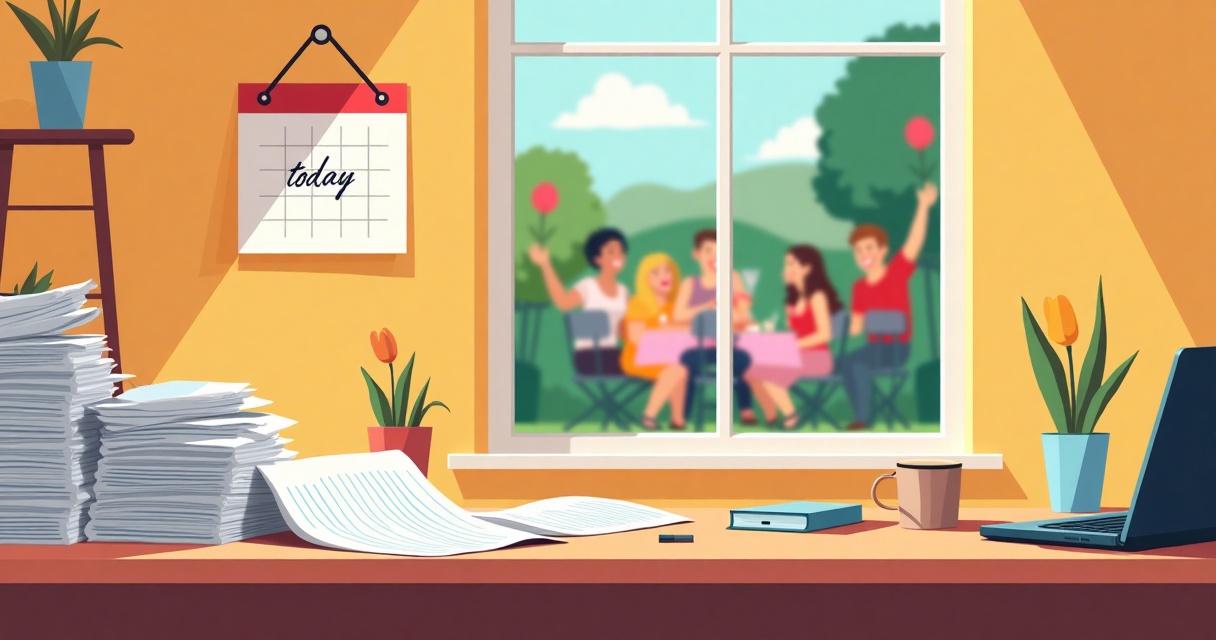
We’ve all said it at some point: “I’ll catch up on fun this weekend.” But the weekend arrives, and the pile of movies, hobbies, and laughter remains untouched. The saying “it is easier to catch up on work than on fun” captures a quiet truth about human nature. Work backlogs feel like items on a checklist—you can power through them. Fun, however, doesn’t wait. It evaporates the moment you postpone it, leaving behind a residue of missed connection and dulled spirit. This proverb isn’t just about productivity; it’s a mirror reflecting how we prioritize the urgent over the soulful.
2. Why Work Backlogs Feel Manageable (But Fun Slips Away)
Work tasks have a built-in logic. A missed email, a delayed report, even a stack of meetings—these can be compressed into a marathon session. You can skim through emails, batch-process documents, and reschedule appointments. The structure of work gives you a roadmap for catching up. Fun, on the other hand, lacks that linearity. A sunset you didn’t watch, a game you didn’t play, a joke you weren’t present to hear—these can’t be double-clicked later. They exist only in the moment, and once that moment passes, the opportunity is gone. This is why it’s easier to catch up on work than on fun: work is a container you can refill, while fun is a fragrance that fades.
3. The Fleeting Nature of Joy: A Mindfulness Insight
Mindfulness teaches us that joy is always available, but it doesn’t store well. You can’t “bank” laughter or stockpile contentment for a future rainy day. In the same way that why miracles occur in gardens reminds us that wonder is found in the present act of noticing, fun demands our full attention in the here and now. When you push a fun activity to the bottom of your list, you’re not just rescheduling a task—you’re declining an invitation to be alive. The fleeting nature of joy means that every moment you postpone is a moment you’ll never get back. The more you treat fun as optional, the more you train your mind to overlook the small miracles that make life rich.
4. How Our Brains Trick Us into Deferring Happiness
Our brains are wired to prioritize short-term discomfort over long-term fulfillment. Work often comes with external pressures, deadlines, and the promise of a paycheck. Fun, by contrast, offers no immediate alarm bell. There’s no boss waiting for your “fun report.” So the brain, in its well-meaning but misguided way, slots fun into the “nice-to-have” column. This cognitive bias is what makes it easier to catch up on work than on fun—we’re conditioned to see productivity as a measure of worth, while leisure feels like a detour. But what if we’ve got it backwards? The real backlog isn’t the inbox; it’s the life you keep putting on hold. By understanding that our brains sabotage our happiness, we can start to rewire those automatic choices.
5. Practical Steps to Stop Postponing Your Life
It’s not enough to recognize the pattern; you need to act. Here are a few ways to ensure fun doesn’t end up on the “catch-up” list:
- Schedule fun like a meeting: Block time on your calendar for a walk, a board game, or a phone call with a friend. Treat it as non-negotiable.
- Start small: You don’t need a full day off. A five-minute dance break or a moment of stargazing can recalibrate your mood.
- Practice saying no: Every time you say yes to a low-priority work task, you’re saying no to something else. Guard your fun time fiercely.
- Reframe fun as a necessity: Remind yourself that joy fuels creativity, resilience, and even work performance. It’s not a reward for finishing; it’s the fuel for starting.
In the spirit of keep your face to the sunshine, the simple act of turning your attention toward what lights you up can shift your entire day. The divide between work and fun isn’t governed by time, but by intention. Once you realize that it’s easier to catch up on work than on fun, you can start reclaiming the moments that truly matter.