
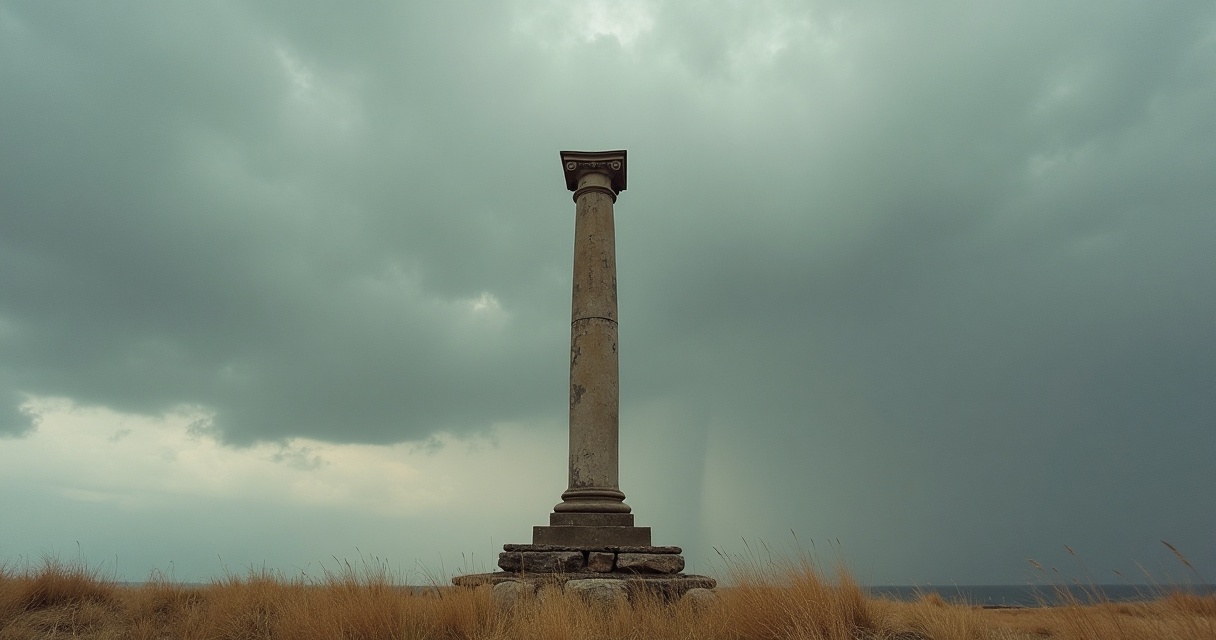

The Stoics didn’t treat hardship as evidence that life had gone wrong. They treated it as the proving ground for character. In his essay On Providence, Seneca wrote: “Fire is the test of gold; adversity, of strong men.” His point wasn’t that suffering is good in itself — it was that strength you’ve never had to use is strength you can’t actually claim yet.
Epictetus, who was born into slavery and later became one of Rome’s most influential teachers, built his entire philosophy on a version of this same idea: physical hardship and misfortune couldn’t touch a person’s actual character, only their own judgment and surrender could. Marcus Aurelius, who spent much of his reign as emperor dealing with plague, war, and the slow grind of governing, treated obstacles the same way in his private notebook — as material for practicing virtue, not evidence that something had gone wrong. This is the same stoic hard work ethic that runs through all three of them: discomfort is the price of admission for genuine strength, not a sign you took a wrong turn.
The stoic quotes on hard work below take that same idea in different directions — some ancient Stoic philosophy, some modern, all circling the same conclusion: real strength is built under load, not granted before it.
On Facing Adversity
Amor fati
The Gay Science (Friedrich Nietzsche)
Stare misfortune down with hopeful eyes
Possibly a modern English proverb. (Unknown)
Birds sing after a storm
Proverb of uncertain origin. (English proverb)
Adapt or perish
Mind at the End of Its Tether (H.G. Wells)
Don’t try to change what can’t be changed
Similar sentiment to the Serenity Prayer by Reinhold Niebuhr. (General proverb)
On Inner Resilience
No one can make you feel bad without your help.
Attributed to a 1935 speech; also found in her writings (Eleanor Roosevelt)
Never give way to melancholy
The Pickwick Papers (Charles Dickens)
Be strong, but never brutal
Attribution uncertain; likely a modern saying with no single known author. (Unknown)
You are only a victim if you allow yourself to be
Modern saying of uncertain origin, attribution disputed. (Unknown)
Most of the things you worry about never happen
Often attributed to Mark Twain, though the exact phrasing varies. (Mark Twain)
Everyone has demons to overcome
No specific source; likely modern proverb from self-help contexts. (Common saying)
On Getting Back Up
Great people fail as often as ordinary people
Modern aphorism of uncertain origin. (Anonymous)
Stop disappointing yourself
Contemporary saying with no clear origin. (Anonymous)
If you get off track, get back on as fast as you can
Common motivational proverb of uncertain origin. (Anonymous)
There is no shortcut to fame
Common modern Western proverb of uncertain origin. (Unknown)
Have the spirit of conquest
The Master Key System (Charles F. Haanel)
The past can chain you up, but the future can set you free
Origin unknown; commonly used in self-help and motivational contexts. (English)
